Managing your practice’s revenue cycle effectively is crucial to the success of your business. The right medical billing service can save time, reduce errors, improve collections, and even support regulatory compliance—but choosing the right partner can feel overwhelming. To help practices make an informed decision, here are 12 essential medical billing service questions to ask before hiring a medical billing service, with insights into why each one matters and what to look for in responses.
1. How much will it cost?
Cost is a natural concern, but value is more important than price alone. The cheapest service may offer limited support, leading to errors or slower collections. When evaluating pricing:
- Ask if the service charges a flat fee or a percentage of collected charges.
- Understand which services are included in the rate (e.g., claim submission, denial follow-ups, patient billing).
- Consider hidden costs: Are there setup fees, software fees, or charges for additional reporting?
Tip: Look for rates under 10% of collected charges, but focus on what you get for that rate rather than the number itself.
2. Who owns your billing data?
Your practice’s data is one of its most valuable assets. A good billing company should guarantee:
- Ownership: Your data remains yours at all times.
- Portability: You can export or migrate your data easily if you switch vendors or bring billing in-house.
- Security: Access controls and encryption are in place to protect sensitive information.
3. Does it have a good reputation?
Check the billing service’s reputation in the industry:
- Look for online reviews, case studies, or client testimonials.
- Identify patterns: Are there repeated complaints about errors, slow response times, or missing payments?
- Ask for before-and-after results from similar practices.
4. Can the business provide references?
Speaking directly with other clients is one of the best ways to gauge reliability. When contacting references, ask:
- How responsive is the billing team?
- Have there been errors that caused revenue loss?
- Did the company help improve their collections or reduce denials?
5. What type of training has the staff had?
Medical billing is complex, and your billing partner’s staff should be well-trained and continuously educated. Ask about:
- Certifications, such as Certified Professional Biller (CPB) or Certified Medical Reimbursement Specialist (CMRS).
- Ongoing training on CPT, HCPCS, ICD-10, and payer regulations.
- Membership in professional organizations like HBMA or AMBA.
6. What level of compliance and security is offered?
HIPAA compliance is mandatory, but practices need more than just claims of compliance:
- Ask for details about data encryption, secure email/fax, and secure file storage.
- Understand document and equipment destruction policies, such as secure wiping of hard drives.
- Ensure the service has processes to respond to breaches or audits.
7. Who will work on your account?
Knowing who handles your billing and their backup plans is essential:
- Request to meet your dedicated billing specialist or team.
- Ask who will cover for them during vacations or sick days.
- Verify whether your account manager has decision-making authority to resolve denials quickly.
8. Can you get a guarantee of transparency?
Transparency is key to tracking your financial health:
- Will you receive regular reports on collections, denials, and key metrics?
- Are there dashboards or portals for real-time access?
- Does the company clearly define how it communicates with your practice and your level of involvement?
9. Are most of its services electronic?
Modern medical billing should leverage technology for efficiency:
- Electronic eligibility verification, claim submission, and remittance posting.
- Online patient bill pay and credit card processing.
- Automated reminders for unpaid balances or MIPS deadlines.
10. Are there billing follow-up items it doesn’t handle?
No service handles everything. Clarify:
- Which claims, denials, or patient follow-ups are excluded?
- Are there limits on the types of insurance or payers they support?
- Are certain reports or reconciliations considered add-ons?
11. What are its key performance indicators (KPIs)?
KPIs give insight into your practice’s financial health. Ask which metrics are tracked:
- Days in Accounts Receivable (AR)
- Receivables over 120 days
- Denial and resolution rates
- Collections as a percentage of charges
A good billing service not only tracks KPIs but uses them to improve revenue and efficiency. For more insights, check out our medical billing blog.
12. Does the billing company provide help with MIPS tracking?
Quality billing services often go beyond claims processing by offering support for value-based care programs:
- MIPS (Merit-based Incentive Payment System) tracking
- Reminders about submission deadlines
- Educational resources for reporting and compliance
Final thoughts
Choosing a billing service is about more than just cost—it’s about partnering with a company that offers transparency, expertise, and reliable results. Practices that ask these questions are
Offsite Resources For You
American Medical Association – Offers a wide range of practice management resources, guidance on revenue cycle optimization, regulatory updates, and tools for physicians and administrators. (ama-assn.org)
Medical Group Management Association (MGMA) – A leading organization focused on practice management, financial benchmarking, revenue cycle tools, and best practices for healthcare administrators. (mgma.com)
Healthcare Business Management Association (HBMA) – Professional association dedicated to revenue cycle management and medical billing professionals, offering education, advocacy, and industry standards. (hbma.org)
American Medical Billing Association (AMBA) – Provides resources and certification for medical billers, along with educational content on billing best practices and compliance. (americanmedicalbillingassociation.com)
American Association of Healthcare Administrative Management (AAHAM) – Focuses on revenue cycle and administrative management education, standards, and advocacy for healthcare professionals. (aaham.org)
AAPC – Largest professional organization for medical coders and billers offering training, certification, and industry news. (aapc-network.com)
American Health Information Management Association (AHIMA) – Offers education and credentials related to health information management, coding, and privacy which are essential to compliant billing and RCM. (en.wikipedia.org)
What's Next?
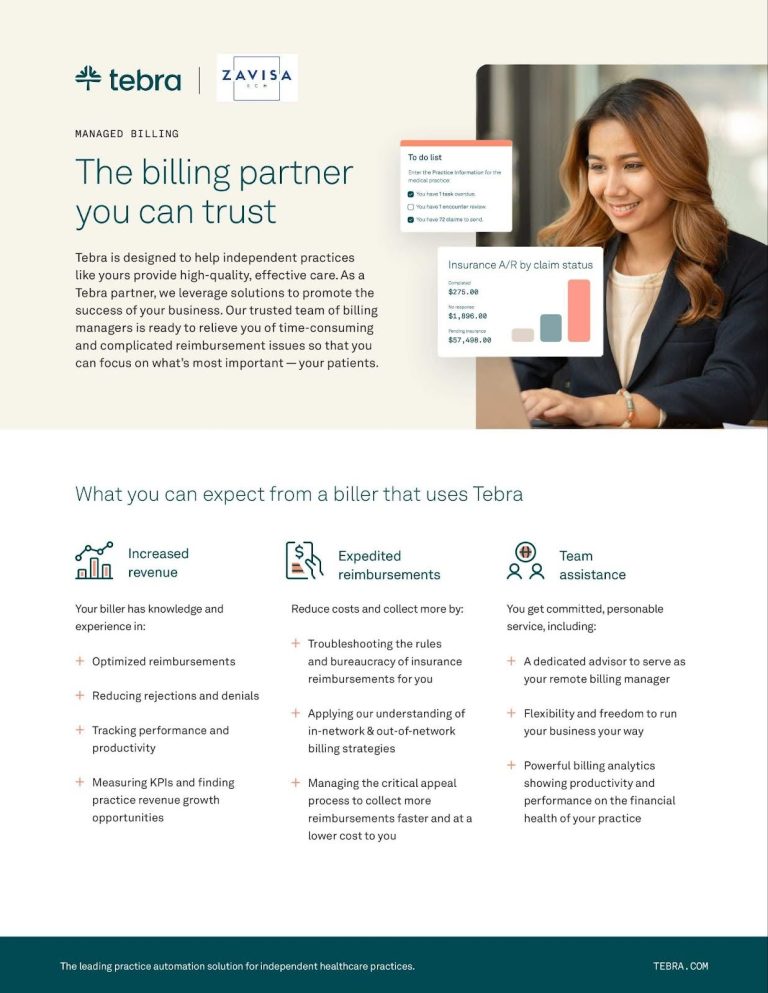
Ready to take the next step toward streamlining your practice’s revenue cycle and maximizing your collections? Our team of experienced billing professionals is here to provide the support, transparency, and expertise your practice needs. Contact us today through our contact page to learn how we can help your practice thrive.